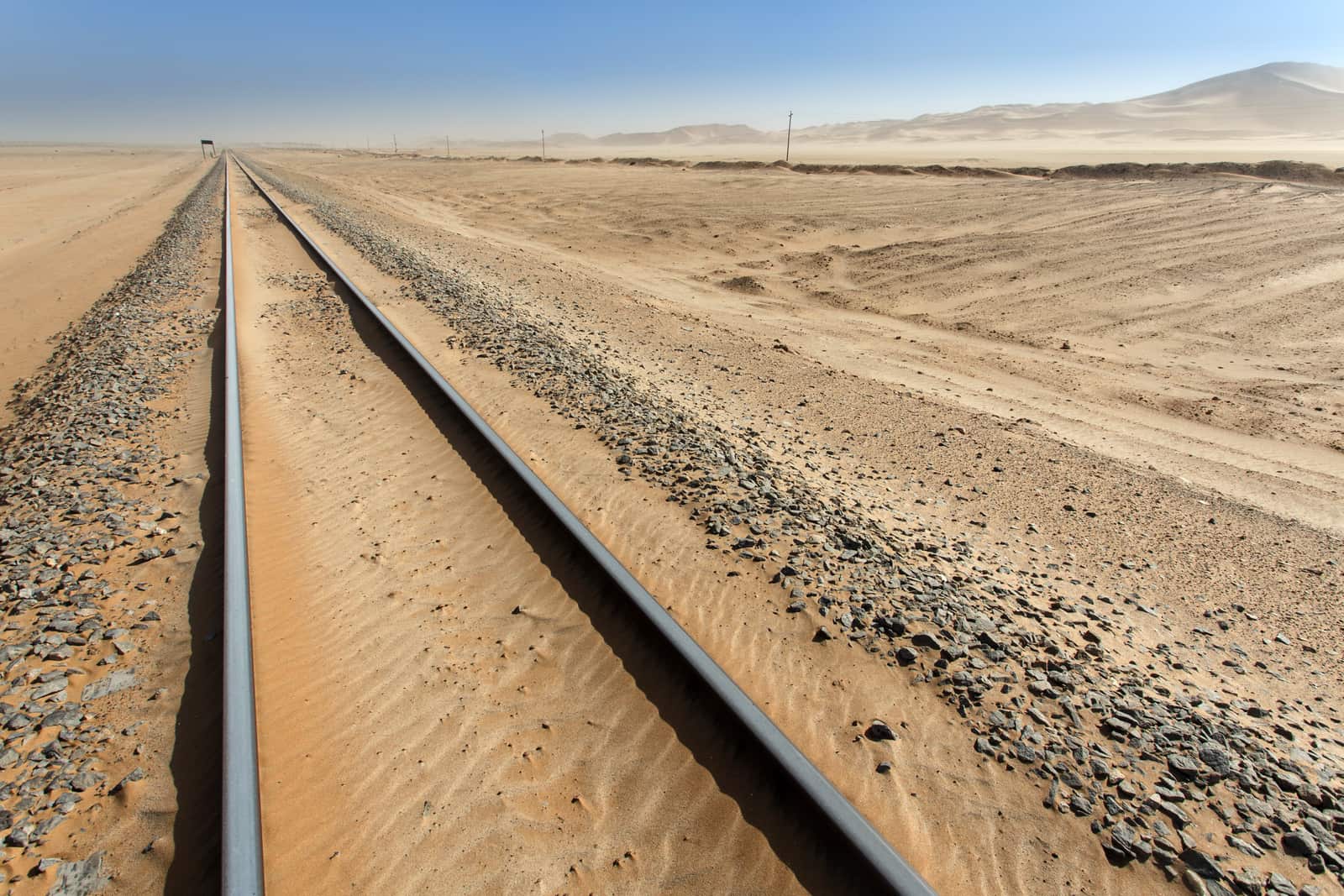
That is what a large part of any Namibian road trip looks like. According to the Roads Authority only 17 per cent of the road network is paved, and the Road Fund Administration even speaks of 90 per cent unpaved roads. The rest is gravel, earth and, along the coast, salt.
Traffic drives on the left. The German Foreign Office says the risk of accidents on long-distance drives is "often underestimated", and that is the heart of it: for self-drivers in Namibia the road is a bigger risk than crime. Drive slowly, arrive in daylight and read your rental contract, and you have most of it covered.
- Traffic
- drive on the leftmostly gravel away from the main roads
- Tar
- 120 km/h60 km/h in towns
- Gravel
- 100 or 80 km/hlaw or rental contract, the contract wins
- Emergency
- 10111police; accidents via MVA Fund: 9682
- Power
- 220 to 230 Vplug types M, D and C, adapter needed
- Time zone
- UTC+2all year since 2017
Speed limits: three numbers for the same road
On tar it is simple. Outside towns the limit is 120 km/h, inside towns 60 km/h. On gravel you will come across three different figures, and it helps to know where each comes from.
By law it is 100 km/h on gravel roads outside towns, according to Wikipedia, which cites the Roads Authority. Unofficial study material for the Namibian learner's test gives the same number. Some road signs show 100 too. The tour operator Expert Africa, by contrast, calls 80 km/h the "absolute maximum speed", and guides such as Uncover Namibia also say 80.
Then there is your contract. The Windhoek rental company African Elegance sets 80 km/h on gravel, recommends 60 km/h and states explicitly that the 80 applies even where a sign allows 100. Exceed it and you lose all insurance cover. Britz tracks its vehicles by GPS and reserves the right to take the car back if a driver repeatedly goes faster than 120 km/h on tar, 60 km/h on gravel or 40 km/h in national parks (terms for 2025/26).
As a renter, the number in your contract matters, not the one on the sign. The German Foreign Office warns that with some companies the insurance lapses even for a slight speeding offence. Read the clause before you collect the car, not after the first stone chip.
Gravel, sand and rain
Gravel handles differently from tar, even when the road has just been graded and looks smooth. The US travel advisory describes the typical accident: too fast into a bend or a patch of sand, and the car skids or rolls. Many of these crashes happen after rain damage, when the road is not what it was the day before. One rental company, namibia2go, names excessive speed on gravel as the main cause of tourist accidents.
Brake before the bend, not in it. Take sandy stretches with steady throttle and no sudden steering. On corrugations, the ridges running across the road, a trip report from 2021 managed only about 50 km/h. And when a car comes the other way, slow down and keep well to the left. Its dust cloud blinds you for a few seconds.
For planning, the operator Namibia Tours & Safaris works with an average of 80 km/h on tar and 60 km/h on gravel. That gets most stages about right, before stops.
The rainy season adds water. From February to April 2026 self-drivers on the namibia-forum.ch message board reported many flooded and closed roads, mostly in the south. Do not drive through water if you do not know how deep it is, and ask at your lodge about the state of the next road.
Watch outA rollover is not necessarily covered, even with a zero-excess policy. At Britz the included Super Cover for 2025/26 excludes rolling the car or tipping it onto its side, as well as damage to the roof and underbody and damage caused by sand or water. On gravel, driving slowly is also about money.
Night driving and wildlife
Drive between towns in daylight only. The German Foreign Office explicitly advises against long-distance driving after dark. Animals appear suddenly and are hard to judge. And with so little traffic, tiredness or a moment's distraction is enough for a serious crash.
Some rental companies put this in the contract. African Elegance excludes driving outside towns after sunset without permission from its insurance cover. The Britz terms for 2025/26 contain no such ban. There is no rule that applies to every company, so check your own contract.
In practice: plan each stage so that you arrive by sunset at the latest.
If something happens: accidents and emergency numbers
The police number is 10111. Report a road accident to the MVA Fund on 9682, which also dispatches the ambulance. Call your rental company straight away as well. Save its emergency number on your phone when you collect the car.
In remote areas, the German Foreign Office says, rescue services can take hours to arrive. Without signal, your help is whoever drives past. That is one more reason to carry plenty of water on lonely roads and not to set off at dusk.
After damage, some insurers reverse the burden of proof. You then have to show you were not negligent. In the worst case you face criminal proceedings. Photograph the scene, get a case number from the police and do not sign anything you do not understand. If you are fined, the Foreign Office advises against paying on the spot; pay at the nearest police station instead.
Before your first gravel stage, check the brakes, tyres, tools and jack. For gravel roads the German Foreign Office recommends two spare tyres.
Fuel and cash
Whether filling stations take cards depends on whom you ask. The German savings bank association wrote "cash only" in July 2023, the Britz terms for 2025/26 say "often cash only", and the travel site reisetopia called Namibia "card-friendly" in 2026. Out in the countryside you cannot rely on it. Always carry cash for filling stations away from the towns.
And fill up whenever you can. The Namibia Wildlife Resorts (NWR) camps have repeatedly had no fuel since early 2025, including Okaukuejo, Halali, Namutoni, Sesriem, Terrace Bay, Ai-Ais and Waterberg. A trip report from August 2026 found no fuel at any camp in Etosha; the travellers filled up at the Etosha Trading Post outside Andersson Gate. Enter the park with a full tank.
ATMs take credit cards and most debit cards, provided your bank has enabled the card for southern Africa. Use machines in shopping centres, supermarkets or banks rather than on the open street, and do not accept help from anyone while withdrawing. Card fraud is common: keep your card in sight when paying and ask for the mobile card machine. If the terminal offers to charge you in your home currency, decline and pay in Namibian dollars.
Safety in Windhoek and on the road
In Windhoek, according to the German Foreign Office, robberies happen mostly on Sundays and public holidays, on the outskirts and right in the city centre. Go for walks without valuables or camera, and do not walk anywhere after dark. A camera round your neck makes you a preferred target.
Do not get into a taxi that already has strangers in it. And if someone flags you down after you leave the airport, pointing at a supposed fault on your car, do not stop; drive on to the next filling station or into town. The Foreign Office reports isolated cases of rental cars being followed from the airport and stopped with exactly this trick.
Out in the country things are calmer, but not carefree. The Foreign Office advises staying only in guarded accommodation, and the Britz contract forbids wild camping. Leave nothing visible in the car, not even for five minutes at the pumps.
Phone, eSIM, power and time
Of the mobile networks, MTC has the better coverage in rural areas, while TN Mobile is strongest in the towns. You can buy a tourist SIM at the airport. Take your passport. Since March 2024 MTC has sold travellers an eSIM that you buy and activate online before you fly. It is data only. Calls go through apps such as WhatsApp. International eSIM apps often roam on TN Mobile and so get weaker signal in the countryside.
Even so, there are long stretches between towns with no signal. Download offline maps for navigation before you set off.
Sources differ slightly on power. The CIA World Factbook gives 220 volts and plug types D and M; worldstandards.eu gives 230 volts, type M as the standard, the European type C as widespread and type D in older buildings. Chargers rated for 220 to 240 volts handle both. For the large three-pin sockets you need a type M adapter, the South African plug.
Namibia keeps UTC+2 all year and does not change the clocks. That puts it one hour ahead of London in the British summer and two hours ahead in winter.
Then and nowWhen the German travelogue on this site was written in 2005, Namibia still put its clocks back in winter: from the first Sunday in April to the first Sunday in September it ran on UTC+1, except for what is now the Zambezi Region. Parliament abolished winter time in 2017. And an MTC eSIM you can load at home has only been on sale since March 2024.
Frequently asked questions
What is the speed limit on gravel roads in Namibia?
The general limit on gravel roads outside towns in Namibia is usually given as 100 km/h. Some rental contracts set 80 or even 60 km/h, and going faster can void your insurance. For renters, the contract wins.
Can you drive at night in Namibia with a rental car?
The German Foreign Office advises against driving between towns in Namibia after dark, mainly because of animals on the road. Some rental companies exclude driving outside towns after sunset from their insurance, others do not. Your rental contract says which applies to you.
What are the emergency numbers in Namibia?
The police in Namibia are on 10111. Report a road accident to the MVA Fund on 9682, which also sends an ambulance. Then call your rental company.
Can you get fuel inside Etosha National Park?
Do not count on it. The Namibia Wildlife Resorts camps in Etosha have repeatedly run out of fuel since 2025, and a trip report from August 2026 found none at any camp. Fill up before entering, for example at the Etosha Trading Post outside Andersson Gate.
Do petrol stations in Namibia accept credit cards?
Not everywhere. Sources range from "cash only" to "card-friendly". Always carry Namibian dollars in cash for filling stations outside the towns.