
Nine of these pages go back to the travel notes of the old namibiareise.de, from the Quiver Tree Forest to Etosha. The texts have been kept and revised, and anything that has changed since appears in a separate dated box. The rest are new, from Twyfelfontein and Spitzkoppe to the wild horses at Garub, the Brandberg and the river parks of the Zambezi Region. Each sight lists places to stay in the nearest town, and where that town has its own page, a link to it.
Windhoek and the highlands
- Windhoek and centreChristuskirche and the Reiterdenkmal
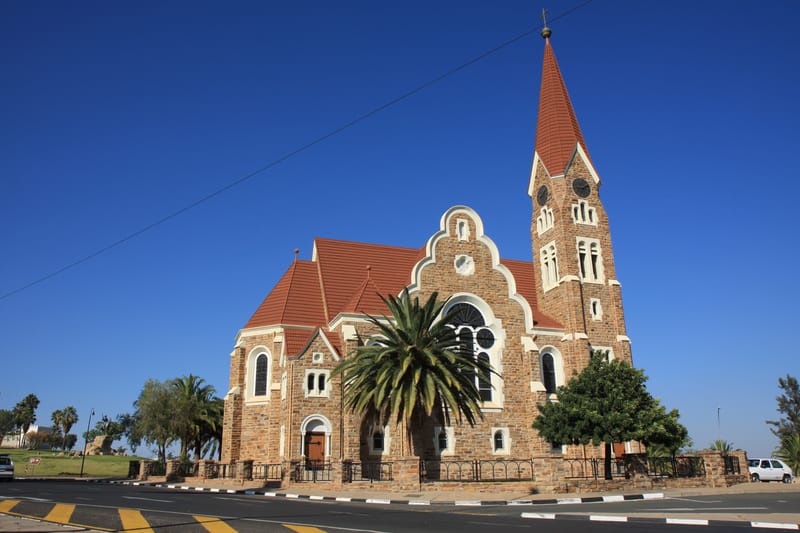
Windhoek's landmark church of 1910 and the story of an equestrian statue that had to move twice.
- Windhoek and centreSpitzkoppe
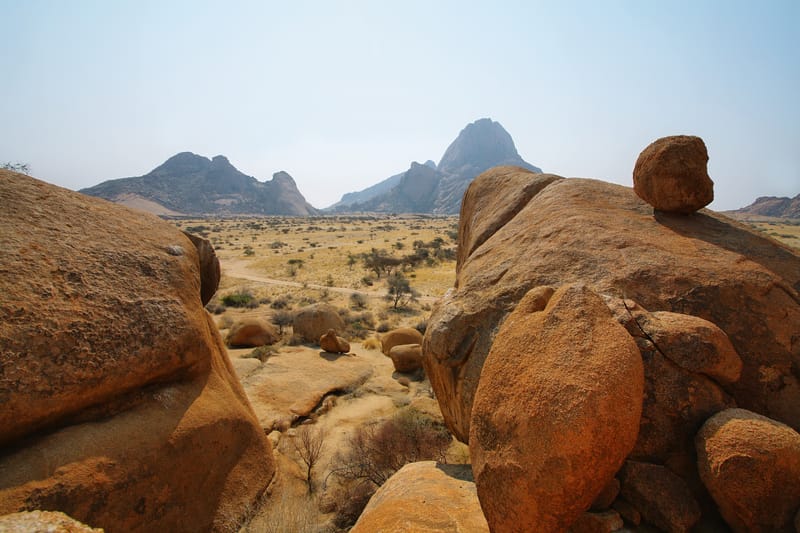
An orange granite peak in the middle of the plain, with campsites among the boulders and old rock paintings.
- Windhoek and centreDaan Viljoen
A slice of the Khomas Highland with zebras and hiking trails, just over 20 kilometres from the capital.


Swakopmund and the coast
- CoastCape Cross
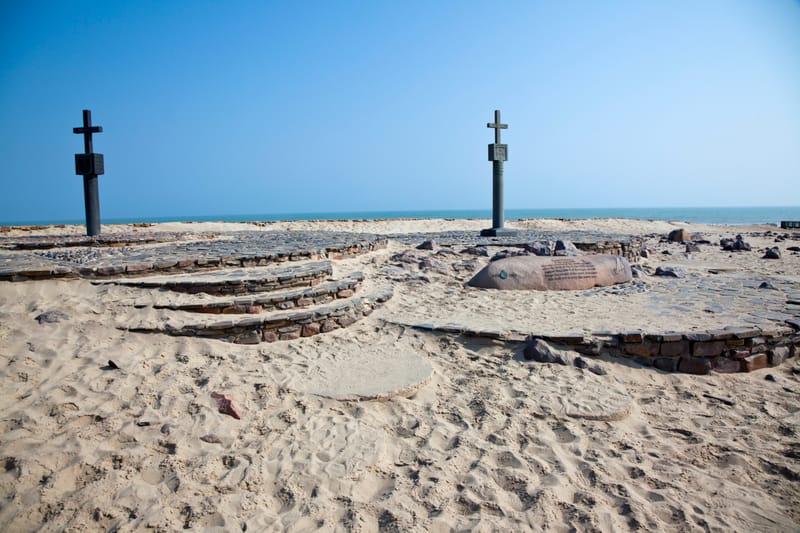
Tens of thousands of seals on the beach, and two stone crosses where a Portuguese navigator landed in 1486.
- CoastSkeleton Coast
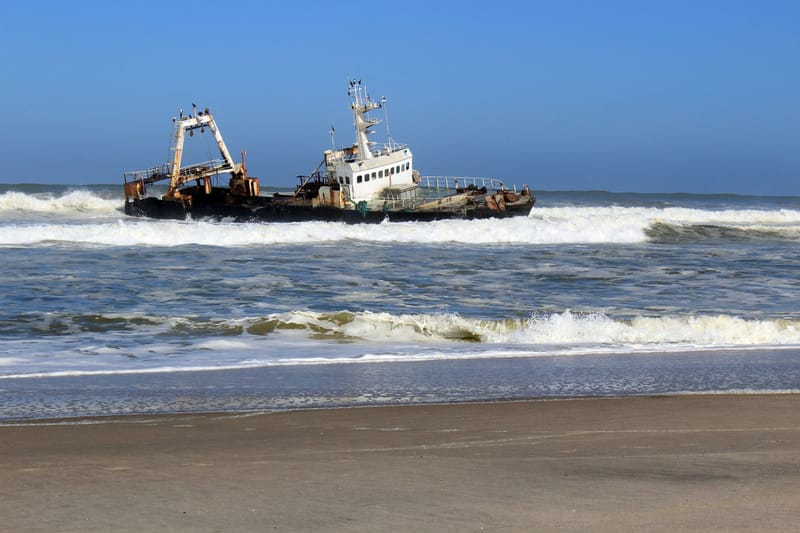
A coast of fog, wrecks and gravel, open to self-drivers in the south.
- CoastSandwich Harbour
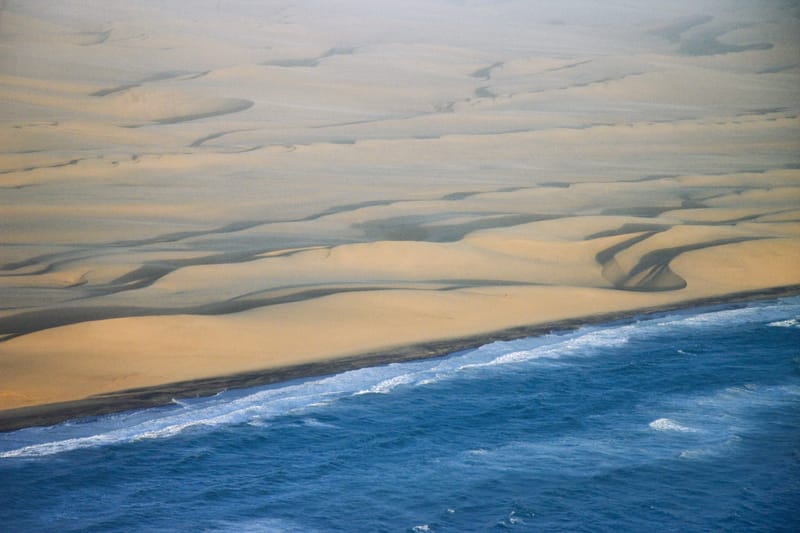
Dunes that run right into the surf, and behind them a lagoon full of flamingos, reachable only at low tide.
- CoastMoon Landscape and Welwitschia Drive
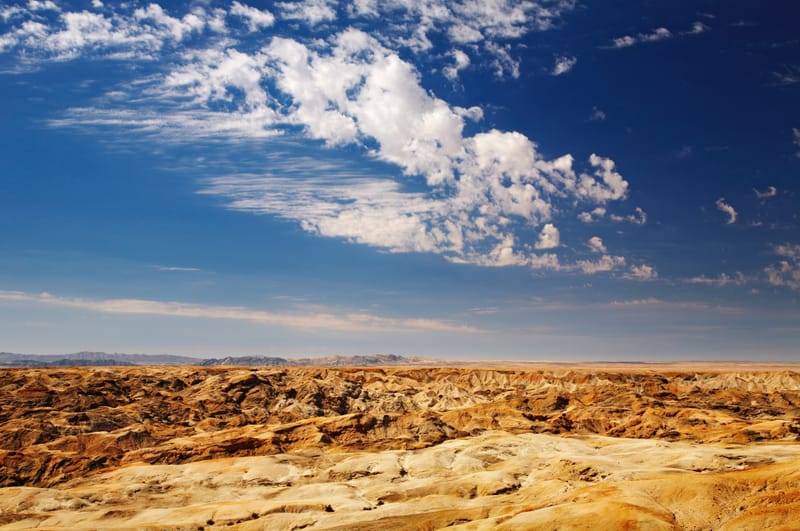
Bare, furrowed hills along the Swakop, and at the end of the track a welwitschia thought to be 1,500 years old.


Sossusvlei and the Namib
- NamibSossusvlei and Deadvlei
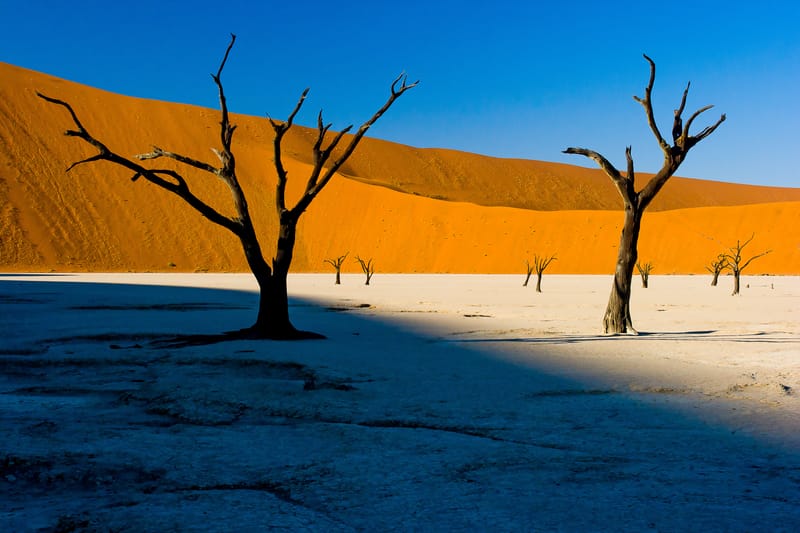
A clay pan among the Namib's tallest dunes, with the dead trees of Deadvlei next door.
- NamibNamib-Naukluft Park
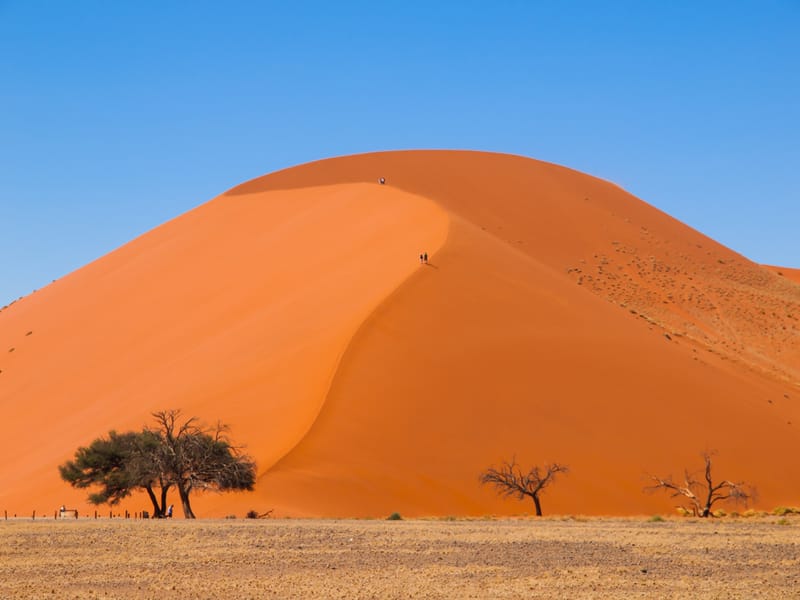
The great desert park between the Swakop and Lüderitz: dunes, Moon Landscape, welwitschias and the Naukluft Mountains.
- NamibKuiseb Canyon
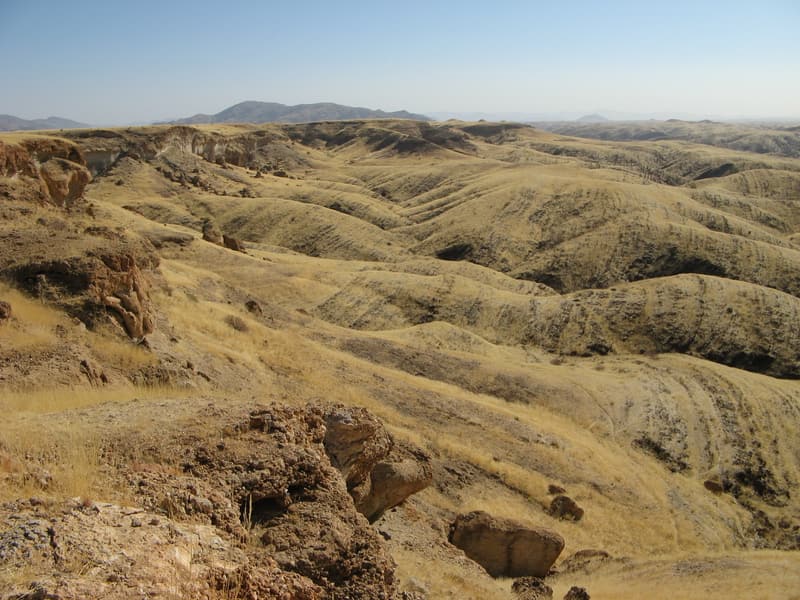
A deep gorge on the C14 where two German geologists hid during the Second World War.
- NamibDuwisib Castle
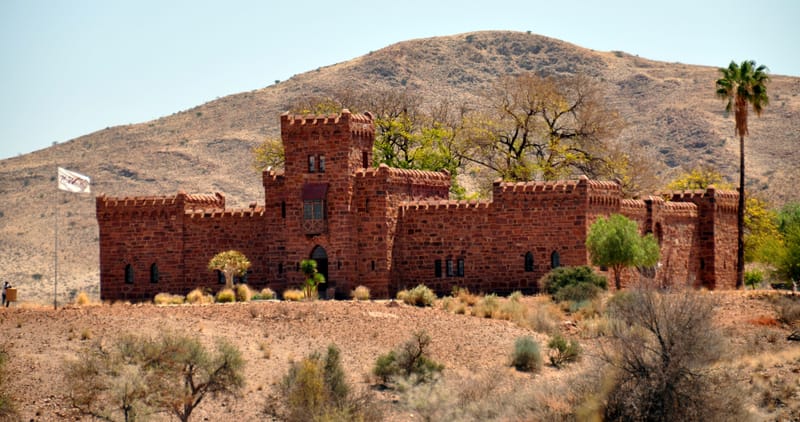
A red sandstone castle in the middle of farmland, built for an officer who barely lived in it.


The south
- SouthQuiver Tree Forest and Giant's Playground
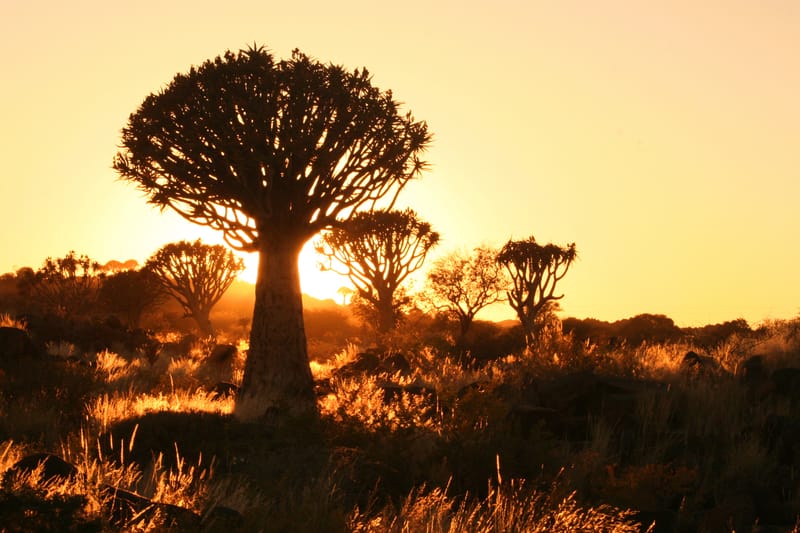
Some 300 quiver trees on a hill near Keetmanshoop, and next door a field of stacked boulders.
- SouthFish River Canyon
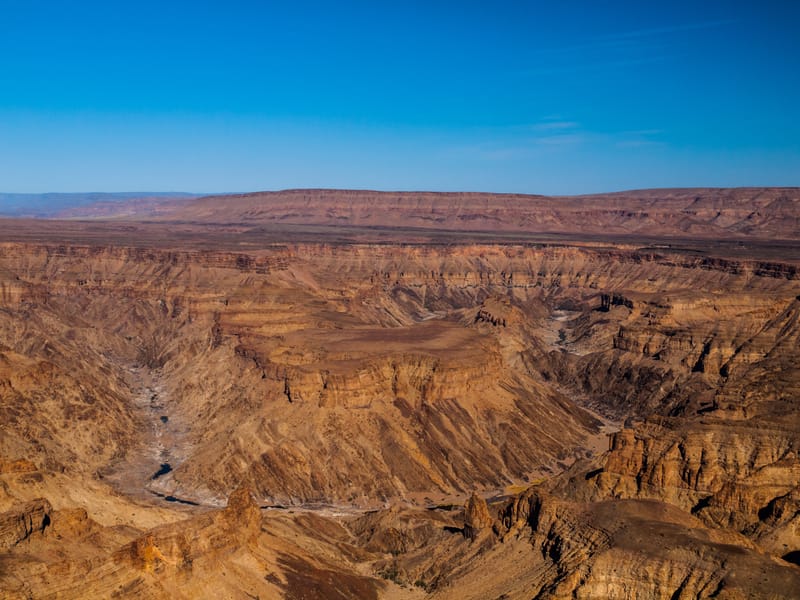
Africa's largest canyon: an hour from the rim, five days on foot.
- SouthKolmanskop
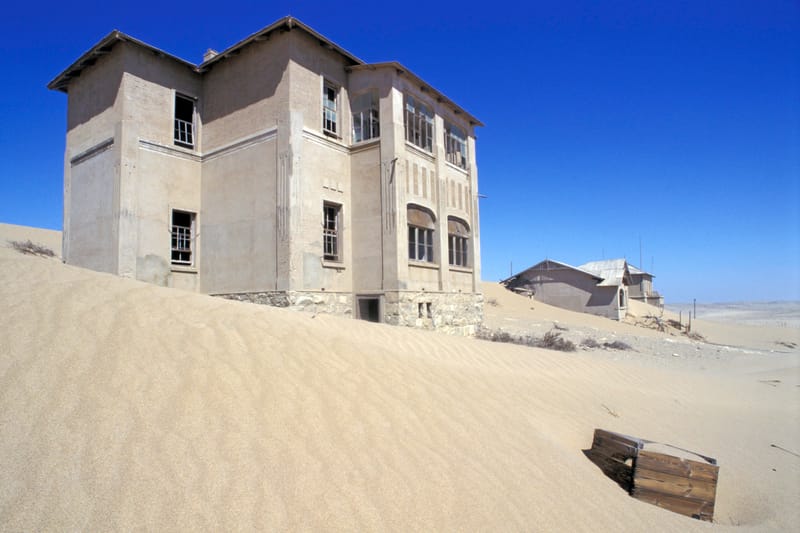
The abandoned diamond town near Lüderitz, where dunes now fill the rooms.
- SouthWild horses at Garub
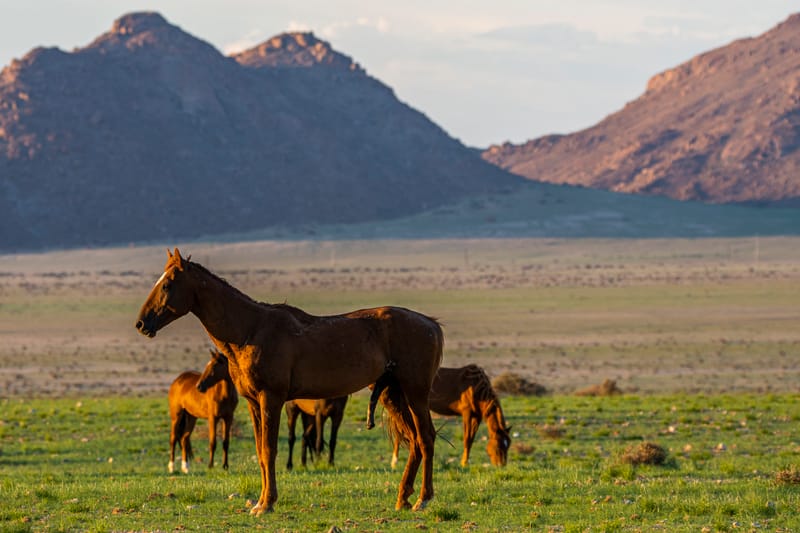
Feral horses on the edge of the Namib that come to drink at an old railway siding.


Etosha and the north
- Etosha and northEtosha National Park
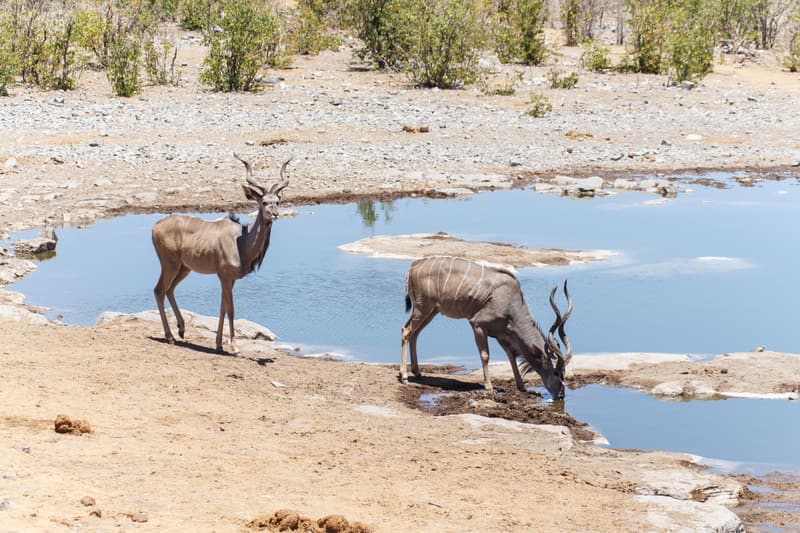
A salt pan 130 kilometres long, ringed by waterholes where the animals take turns.
- Etosha and northWaterberg Plateau
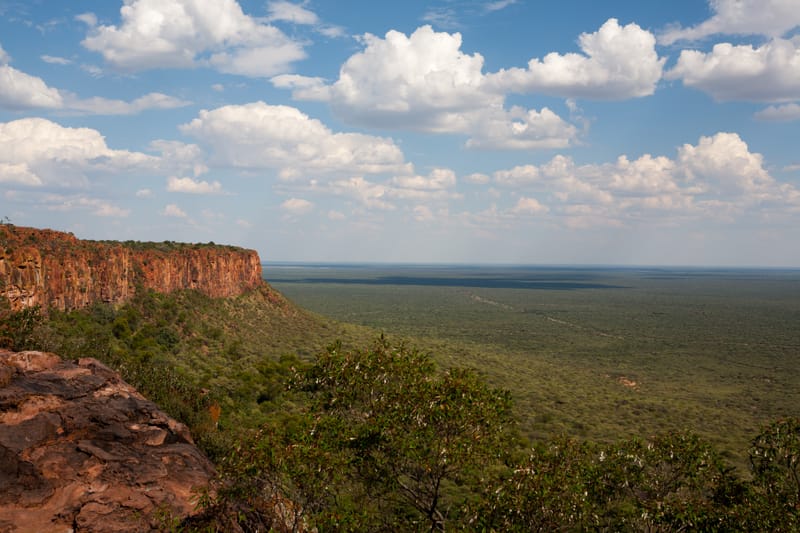
A table mountain of red sandstone above the bush, with trails on its slopes and rare animals on top.
- Etosha and northHoba meteorite
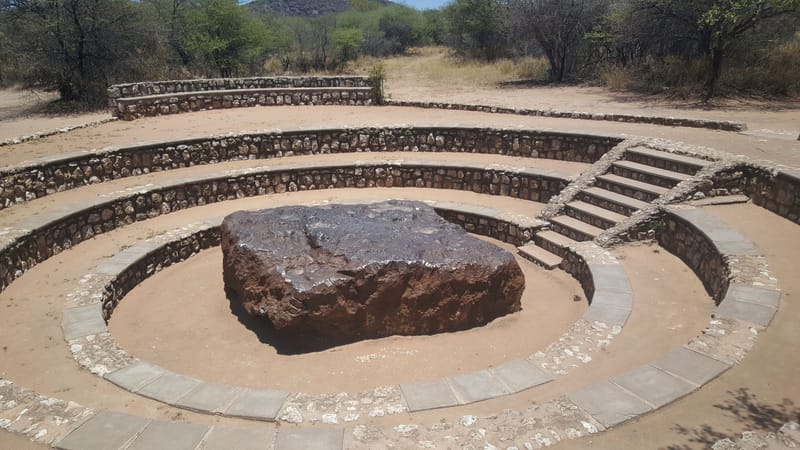
The largest known meteorite on Earth, about 60 tonnes of iron in a farm field near Grootfontein.
- Etosha and northLake Otjikoto
A rock bowl full of water right beside the B1, whose bottom no diver has ever reached.
- Etosha and northVingerklip
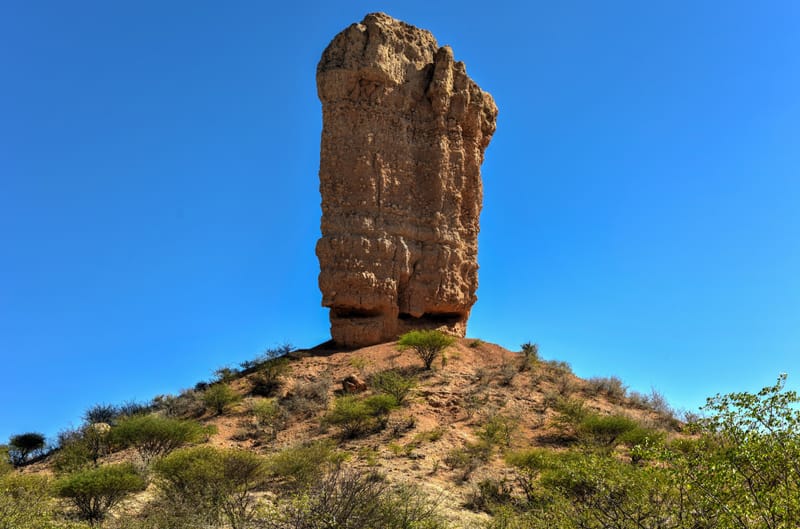
A 35-metre finger of rock in the Ugab valley, best seen from the plateau above the lodge.


Damaraland and Kaokoveld
- Damaraland and KaokoveldTwyfelfontein
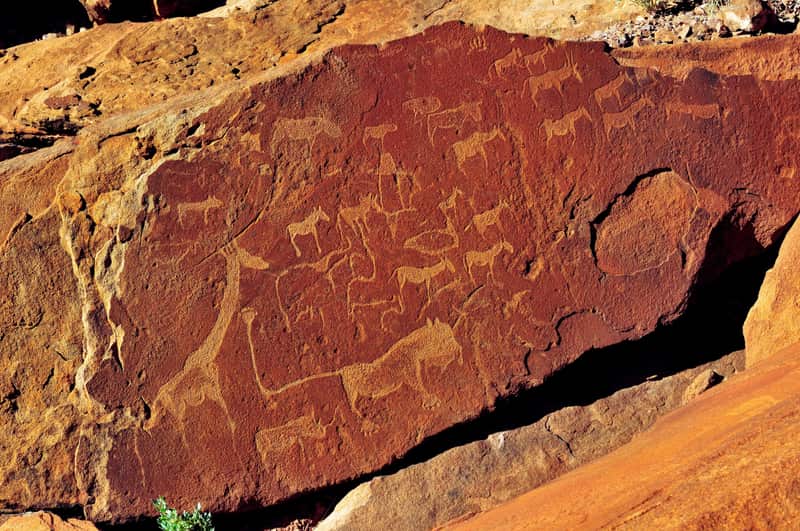
Thousands of animals and signs pecked into sandstone in a dry Damaraland valley, seen only with a guide.
- Damaraland and KaokoveldEpupa Falls
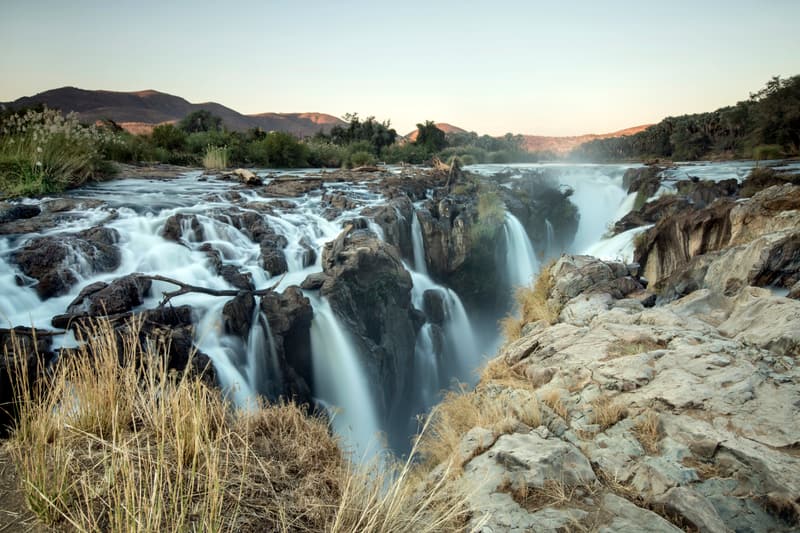
The Kunene plunges into a maze of channels on the Angolan border, framed by baobabs and palms.
- Damaraland and KaokoveldBrandberg
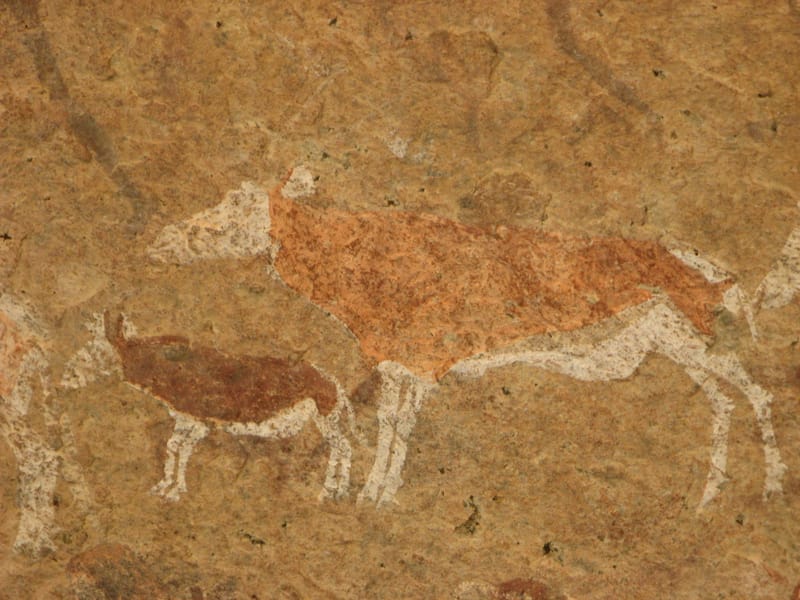
Namibia's highest mountain and a gorge full of rock paintings, reached with a guide from Uis.
- Damaraland and KaokoveldPetrified Forest
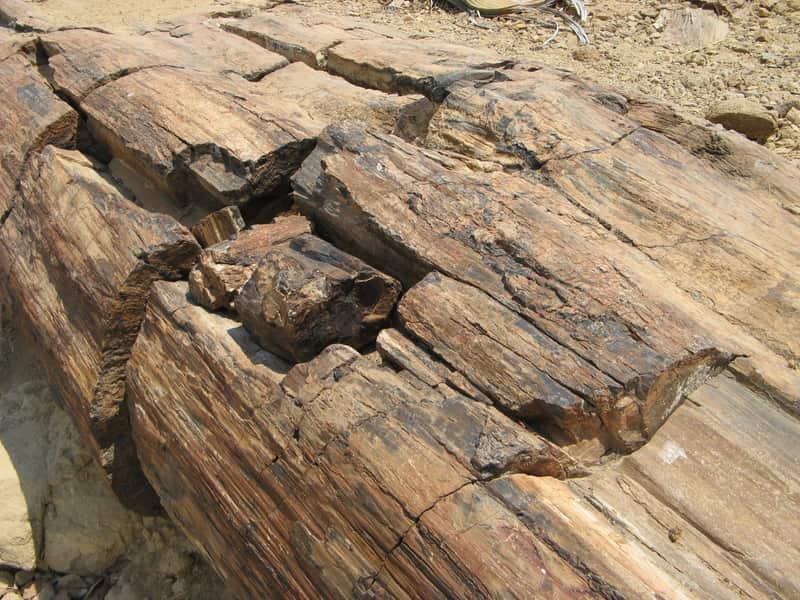
Giant trunks of stone beside the C39, with welwitschias between them, shown to you by a guide.


Kavango and Zambezi

Our tipParks charge by the day. Put Sossusvlei, Deadvlei and Sesriem Canyon on the same day and you pay the fee for them only once.
Frequently asked questions
Which sights in Namibia charge park fees?
Namibia's national parks charge a daily fee; since 1 April 2026 foreign adults pay N$ 280 in Etosha, Namib-Naukluft with Sossusvlei, the Fish River Canyon, the Waterberg and the Skeleton Coast. Other places such as the Quiver Tree Forest or Twyfelfontein charge their own entry fee.
Which sights in Namibia are close to each other?
Sossusvlei, Deadvlei and Sesriem Canyon lie in the same part of the Namib-Naukluft Park and fit into one day. Kolmanskop is a few kilometres outside Lüderitz, and the Quiver Tree Forest and Giant's Playground share a farm near Keetmanshoop.
Which sights in Namibia are UNESCO World Heritage Sites?
In Namibia the rock engravings of Twyfelfontein have been on the UNESCO World Heritage List since 2007, and the Namib Sand Sea with Sossusvlei since 2013.